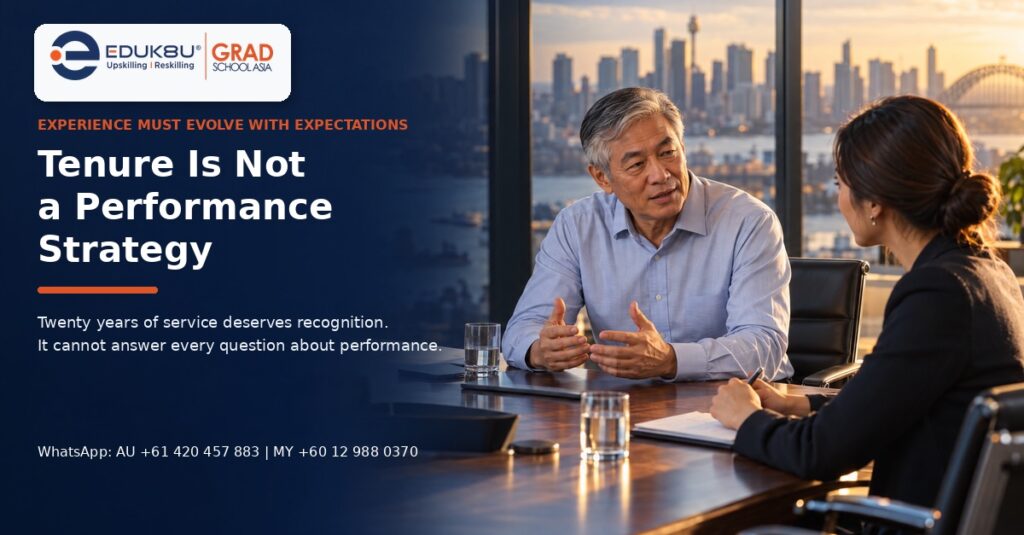
“I have been here for 20 years.” That statement deserves recognition. Experience can bring judgement, customer knowledge, industry relationships, and an understanding of how a business operates.
But experience cannot answer every question about performance.
The more important question in 2026 is:What are we doing with that experience as the business, its customers, and its technology change?
Across industries, organisations are working to improve speed, accuracy, and productivity by investing in systems that process information faster, improve visibility, and support better decision making. As highlighted in McKinsey’s research on strategic workforce planning, aligning talent decisions with core business strategy and technology demands is vital, a priority echoed in Deloitte’s Global Human Capital Trends on future-proofing operations.
Yet, a new system cannot deliver its potential if people continue to insist:
- “We have always done it this way”.
- “That is not how my role works”.
- “The old process is good enough”.
- “I have been here too long to change now”.
That mindset can exist at any age or level of seniority, whether with a long-serving manager, a new employee, an executive, or across an entire organisation. The issue is never the number of years someone has worked; the issue is whether they are willing and able to continue learning and contributing.
Experience must evolve with expectations
Consider a logistics manager with deep knowledge of customers, routes, and operations. That experience is valuable, but if the company introduces a platform that enables faster planning and exception management, the manager must also learn how to use it and lead the team through the change.
The organisation carries responsibilities too: it must explain why the change matters, provide access to learning, allow reasonable time to build capability, and remove barriers where possible. As highlighted in Gartner’s CHRO Top Priorities, strategic workforce development must shift beyond simple headcount management to actively address these evolving skill requirements.
However, accountability must match that support. When expectations are clear, resources are available, and guidance has been provided, continuing to rely on yesterday’s methods without good reason directly affects colleagues, customers, and business performance.
HR’s role is to lead the difficult conversation.
Strategic HR cannot avoid this discussion simply because it is uncomfortable. HR leaders need to help managers distinguish between a skills gap, unclear expectations, poor system design, and a genuine unwillingness to adapt. Each challenge requires a distinctly different response, a pressing operational reality given Korn Ferry’s Future of Work research, which projects a significant global deficit of skilled talent by 2030.
PwC’s 2026 Malaysian workforce research similarly describes a workforce actively engaging with technology and building new skills while navigating workload and economic pressures. That makes the quality of organisational support and the clarity of expectations especially critical.
The ultimate goal must be to bring deep experience and new capability together. A person’s contribution is not defined only by how long they have been with an organisation, but by how they apply their knowledge, respond to change, and help the business meet its future needs.
Experience matters. So does the willingness to keep it relevant.
(This leadership conversation is explored through EDUK8U®’s Executive Master of HRM and proposed Australian Executive HR Leadership Study Tour.)
Let’s start the conversation on WhatsApp: AU +61 420 457 883 | MY +60 12 988 0370.
#StrategicHR #HRLeadership #StrategicPlanning #WorkforcePlanning #HRBP #HRStrategy #ScenarioPlanning #RiskManagement #ExecutiveLeadership #LeadershipDevelopment #ExecutiveEducation #GraduateDiploma #FutureOfWork2026 #APACBusiness #AustraliaHR #MalaysiaHR #SingaporeHR #EDUK8U #ICQA #StrategicTransformation #OrganisationalDesign #ChangeLeadership #WorkplaceCulture #EmployeeWellbeing